
Introducing Our Journal Optimization Service
In today’s rapidly evolving scholarly publishing landscape, academic journals must meet high standards of visibility, credibility, technical performance, and indexing compliance. The Journal Optimization Service is designed to help journals strengthen their operational efficiency, enhance discoverability, improve editorial workflows, and align with international publishing best practices.
Our service provides a comprehensive review and strategic enhancement of journal systems, policies, metadata structure, indexing readiness, website performance, and publishing standards. Whether your journal operates on platforms such as Open Journal Systems or other editorial management systems, we identify technical gaps, compliance issues, and performance bottlenecks that may hinder growth and indexing eligibility.
Through targeted optimization strategies—including metadata refinement, DOI integration, SEO enhancement, plugin configuration, indexing preparation, ethical policy alignment, and workflow restructuring—we position journals for improved global visibility and sustainable impact.
The Journal Optimization Service is ideal for new journals seeking a strong foundation, as well as established journals aiming to qualify for indexing databases, improve citation metrics, or professionalize their publishing operations.
Let Afrischolar Discovery help you transform your journal into a competitive, credible, and globally discoverable scholarly publication.
N/B: Our Optimization Services Covers only websites built with Open Journal System
Below are some Journals we have successfully optimized:
Before
After
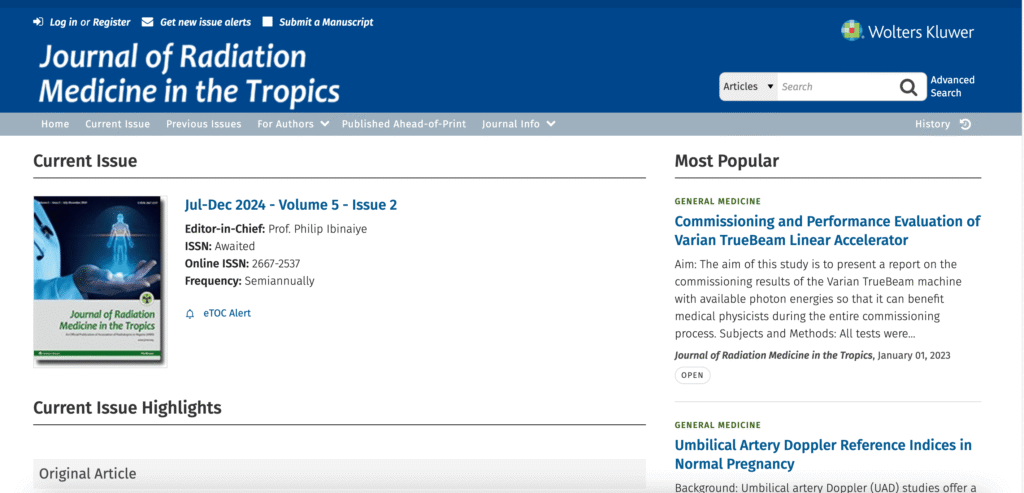

Journal of Radiation Medicine in the Tropics (JRMT)
What did we optimize?
1. We provided Digital Object Identifiers to all articles in the archive
2. We enabled important plugins that will boost the functionality of the Website
3. We updated the banner for a better appeal
4. We setup policies that will help them with indexing
5. We added EPUB galleys for all articles in the archive
6. The author names were all lumped together in the GIVEN NAME field. We had to reenter them properly for all articles.
Before
After
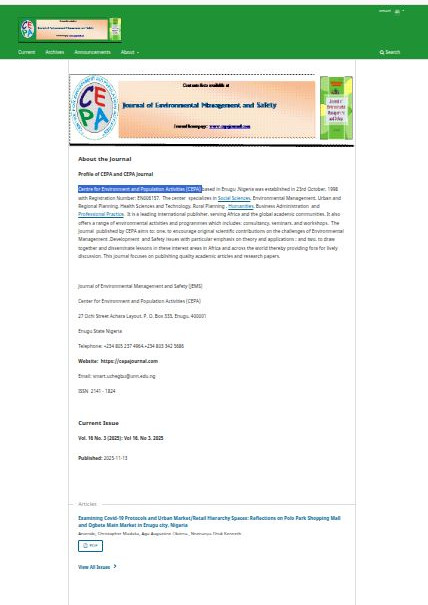

What did we do for them?
1. The archive representation was improper.
2. The banner was improved
3. The logo had to be redefined
4. Keywords were lumped together, making it difficult for indexing. It had to be rentered individually to impact visibility
5. The Editorial Team was not properly arranged
6. We added a quick respond code and enabled a Flag Counter for country-wise statistics
7. We enabled a sidebar to add items for a more aesthetic appeal
8. A disproportionate font arrangement was observed within issues. That had to be fixed
9. The abstracts were inordinately italicized.
10. There was no favicon to represent the Journal in the Address Bar
11. Some articles did not have keywords configured
12. Some author names were inordinately capitilized
13. We enabled important plugins that will boost the functionality of the Website